Experience from the iStream Transnational Training Course
Published:
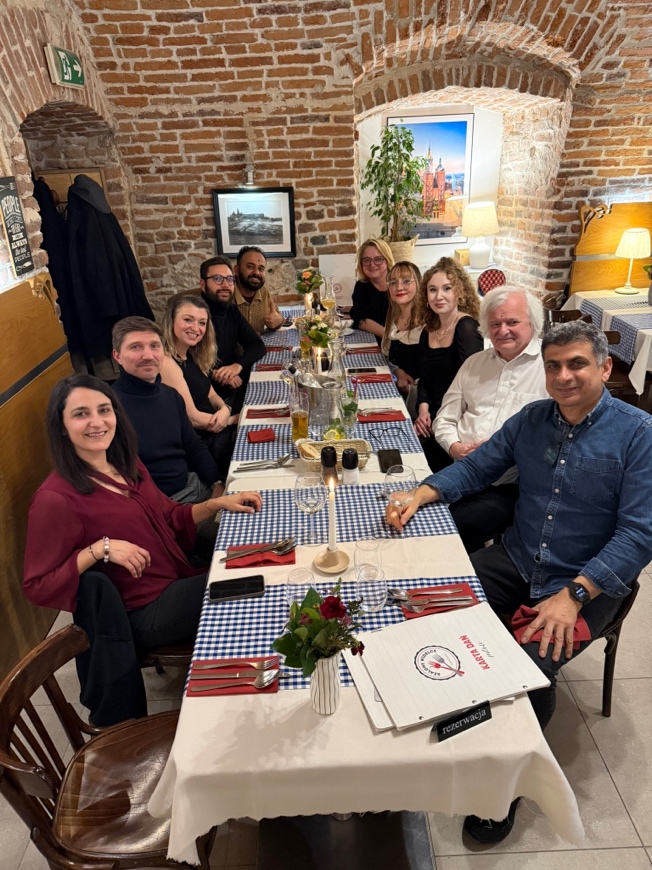
Prof. Luca Virgili and Dr. Gagan Narang from Università Politecnica delle Marche participated in the iStream project’s (https://www.istream-project.eu) Transnational Training Course held in Kraków from 23 to 27 March 2026, hosted by Uniwersytet Komisji Edukacji Narodowej w Krakowie, Poland.
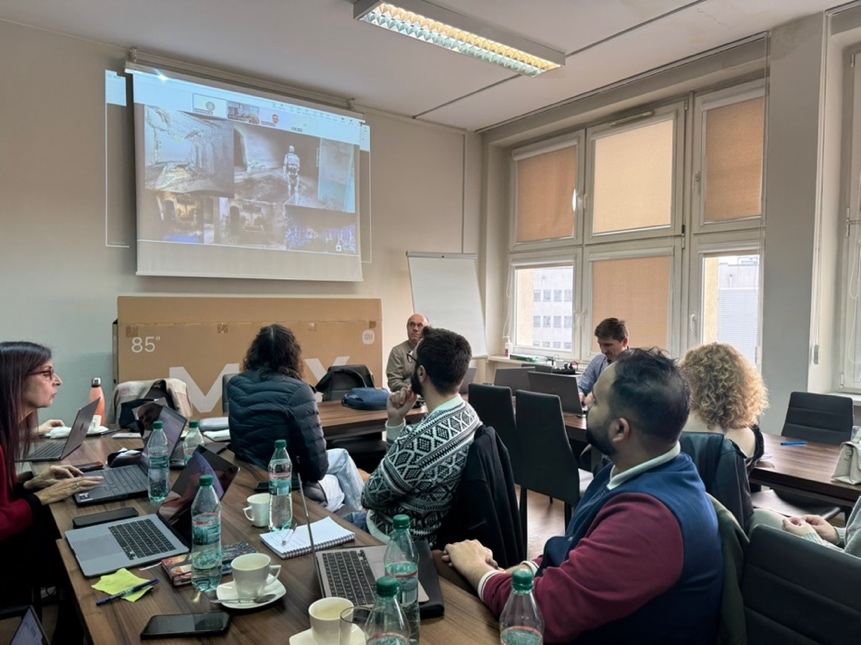
The programme began with an introductory session led by Dr. Mateusz Łabuz, who presented the concept of synthetic worlds and discussed the role of deepfakes, chatbots, and generative artificial intelligence in contemporary media. This was followed by a session from Prof. Marcin Klimek, focusing on the development of virtual media personalities and AI driven storytelling workflows. The first day concluded with a technical session by Prof. Łukasz Mirocha, who introduced hybrid approaches combining real and synthetic content in immersive environments.
On the following day, activities moved to FabLab Małopolska, where Dr. Adrian Chruściel led a practical session. Participants were introduced to immersive tools and workflows, gaining direct experience with VR and AR technologies in a laboratory setting. The day also included a visit to an immersive media centre, where participants observed how immersive exhibitions are designed and how audiences interact with them. The third day focused on advanced applications, where Ms. Zoë Land presented key principles for designing immersive laboratories, including infrastructure and workflow considerations. This was followed by Dr. Karolina Buchta, who introduced the use of voice assistants in virtual reality and explained how interactivity can be integrated into immersive storytelling. Later, Dr. Magdalena Igras-Cybulska delivered a session on audience perception, examining how immersive experiences influence engagement and empathy over time.
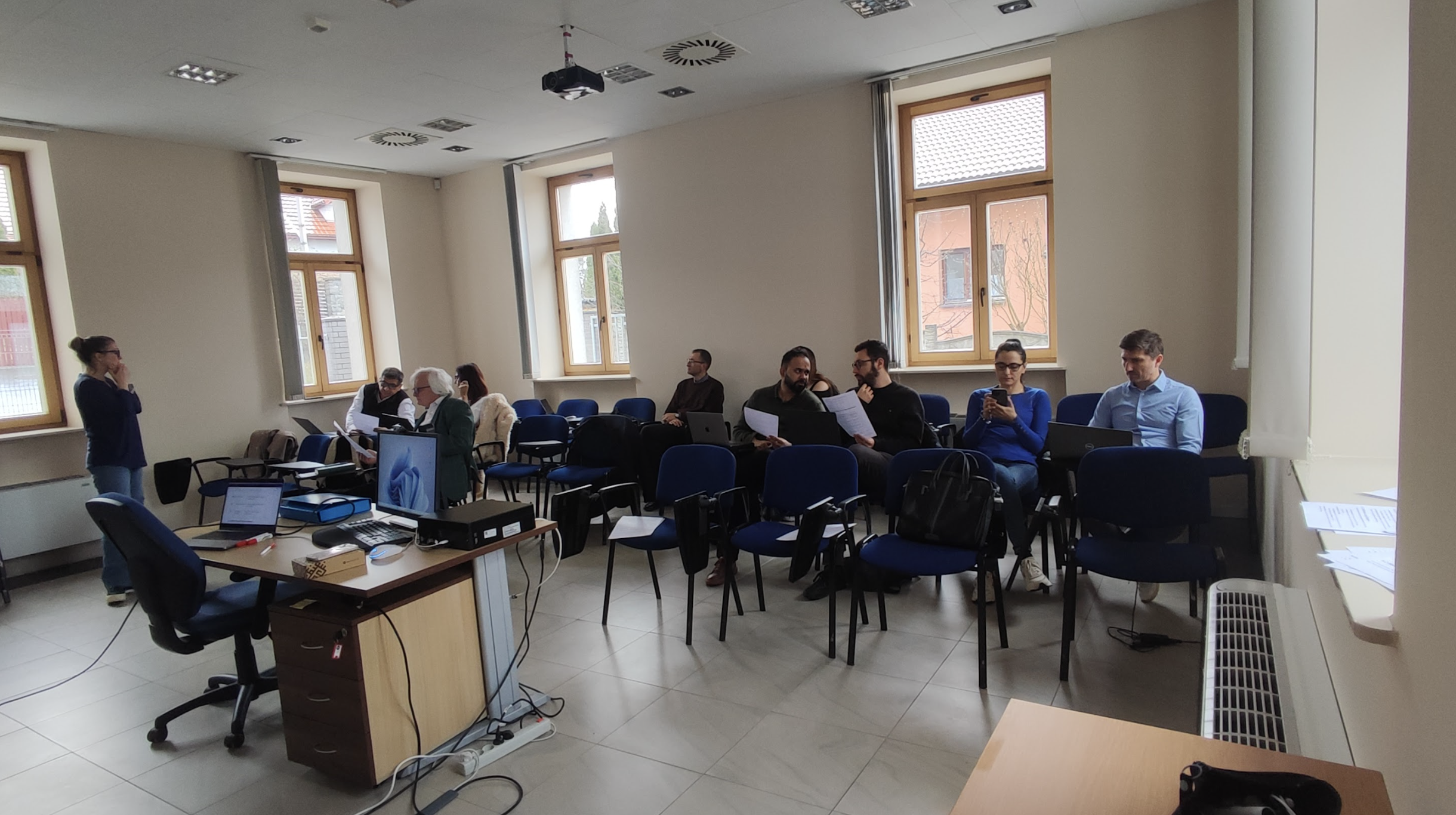
Throughout the programme, seminars and discussions were combined with hands on activities, allowing participants to connect theoretical concepts with practical implementation. The training also created opportunities for networking, with participants engaging with researchers, trainers, and students from the hosting institution. These interactions supported exchange of perspectives and opened possibilities for future collaboration. As a result of the training, both researchers strengthened competencies in immersive journalism, including the application of VR and AI tools, the design of immersive narratives, and the analysis of audience engagement. At the conclusion of the programme, they were awarded mobility certificates recognizing their participation and learning outcomes.